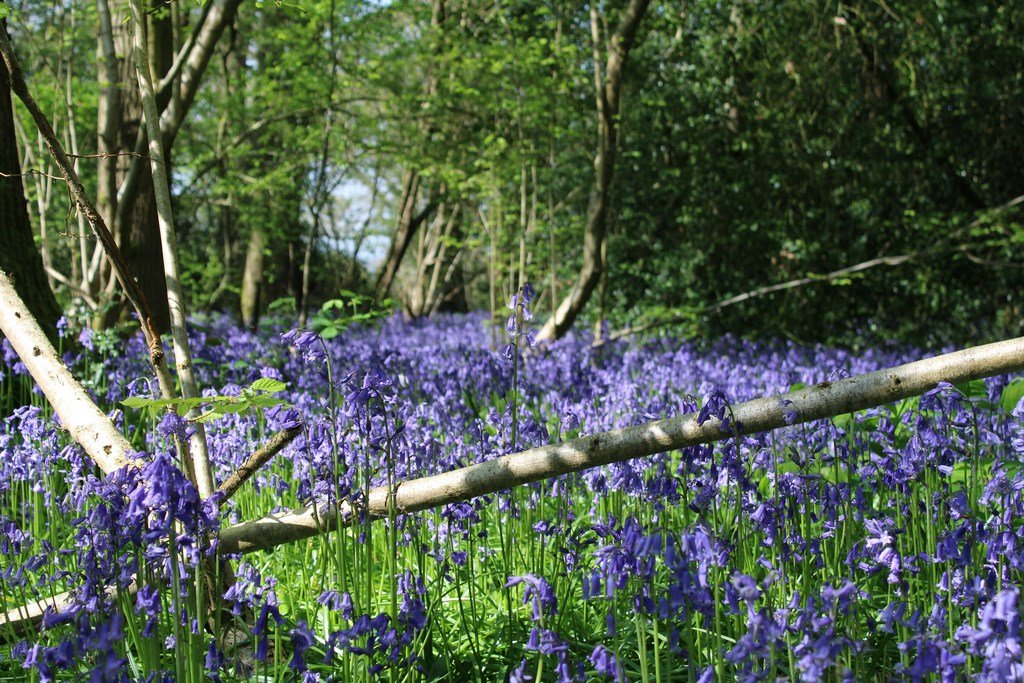
There is a moment in the British spring—usually between late April and early May—when the floor of our ancient woodlands appears to liquefy into a shimmering, violet-blue haze. It is a spectacle found nowhere else in the world quite like it; the UK is home to over half of the global population of English Bluebells (Hyacinthoides non-scripta).
As a traveller who has spent many a spring morning dampening my boots in the dewy glades of the Home Counties and the Lake District, I can tell you that a “bluebell walk” is more than just a stroll. It is a sensory overload: the delicate, honey-like scent hanging in the still air, the vibrant contrast of new-growth beech leaves against the purple carpet, and the quiet hum of bumblebees enjoying the first nectar of the season.
In this guide, we reveal the most enchanting spots to witness this fleeting floral masterpiece in 2026.
The Magic of the Ancient Woodland
Bluebells are indicators of “ancient woodland”—land that has been continuously wooded since at least 1600. These flowers are slow-colonisers; a bluebell carpet can take decades, if not centuries, to establish. This is why walking through them feels like stepping back into a primeval Britain.
However, they are fragile. A single footstep on a bluebell bulb can kill the plant and prevent it from growing for years. As we explore these “fairytale” woods, the golden rule remains: stick to the paths.
Top 7 Enchanting Bluebell Woods in the UK
1. Micheldever Wood, Hampshire
Often cited as the “Gold Standard” for bluebell photography. The towering, uniform rows of beech trees create a cathedral-like canopy, allowing dappled light to hit the vibrant violet floor.
The Experience: On a misty morning, the straight lines of the trees disappearing into the blue haze are hauntingly beautiful.
Best For: Photographers and silence-seekers.
2. Emmetts Garden, Kent
Located on one of the highest points in Kent, this National Trust property offers a spectacular hillside bluebell display.
The Experience: You get a unique “tiered” view of the flowers, looking down into a valley of blue against the backdrop of the Weald of Kent.
Best For: Families and those who enjoy a post-walk cream tea.
3. Ashridge Estate, Hertfordshire
Specifically, the area around Dockey Wood. Ashridge is vast, but Dockey Wood is so famous for its bluebells that the National Trust sometimes implements a small entry fee during peak weekends to manage the crowds and protect the bulbs.
The Experience: A truly immersive, high-density carpet that seems to stretch to the horizon.
4. Blickling Estate, Norfolk
The Great Wood at Blickling is a tapestry of ancient oaks and beech trees. In spring, the bluebells take over the entire woodland floor, creating a stunning contrast with the estate’s historic red-brick hall.
The Experience: Grand, stately, and quintessentially English.
5. Heartwood Forest, St Albans
A relatively “new” woodland (managed by the Woodland Trust) that contains pockets of very old forest. The Magical Wood here lives up to its name every May.
The Experience: Accessible and great for locals looking for a quick nature fix near London.
6. Kinclaven Bluebell Wood, Perthshire
For our Scottish adventurers, Kinclaven is the jewel of the North. It is a rare survivors of the ancient oak woods that once covered the area.
The Experience: The cooler Scottish climate means the bluebells here often peak slightly later (mid-to-late May), extending the season for dedicated flower-hunters.
7. Skomer Island, Pembrokeshire
A wild card! While not a “wood,” the bluebells on Skomer Island grow in open coastal grassland, turning the entire island purple while puffins nest nearby.
The Experience: A coastal bluebell display is a rare sight and a truly unique photographic opportunity.
Comparison: Britain’s Bluebell Giants
| Location | Region | Best Time to Visit | Terrain Type | Facility Level |
| Micheldever | South East | Late April | Flat/Forest | Low |
| Emmetts Garden | South East | Early May | Hilly/Sloped | High (Cafe/Toilets) |
| Ashridge | East of England | Late April | Forest Trails | Medium |
| Blickling | East of England | Early May | Park/Woodland | High |
| Kinclaven | Scotland | Mid-May | Rugged Wood | Low |
| Skomer Island | Wales | Mid-May | Coastal/Open | Medium (Boat Trip) |
3 Tips for the Perfect Bluebell Walk
Timing is Everything: The season is short (usually 3-4 weeks). Follow the #BluebellWatch hashtag on social media to see real-time updates of when the “carpets” are in full bloom.
The “Golden Hour”: Visit at sunrise or an hour before sunset. The low, warm light makes the blue/violet hues of the flowers “pop” against the green foliage.
Footwear Matters: Even in May, ancient woods can be boggy. Wear your walking boots or wellies—don’t ruin your experience with soggy trainers!
FAQ: The Bluebell Season
1. When is the best time to see bluebells in the UK?
Typically from the last week of April to the second week of May. However, this varies by latitude: southern England peaks earlier, while Scotland and Northern Ireland peak later.
2. Is it illegal to pick bluebells?
Yes. English Bluebells are protected under the Wildlife and Countryside Act 1981. It is illegal to dig up the bulbs or pick the flowers for commercial sale, and highly discouraged for personal use.
3. What is the difference between English and Spanish bluebells?
English bluebells are a deep violet-blue, have a strong sweet scent, and the flowers all “droop” to one side of the stem. Spanish bluebells (an invasive species) are paler, have no scent, and the flowers grow all around the stem, which stands upright.
4. Can I take my dog to bluebell woods?
Most woods are dog-friendly, but you must keep them on a short lead and on the paths. Dogs running through bluebells can crush the delicate stems just as easily as humans.
5. Why are bluebells found in ancient woods?
They prefer the stable environment and rich soil of old woodlands. They have evolved to grow and flower quickly in early spring before the tree canopy fully closes and blocks out the sunlight.