
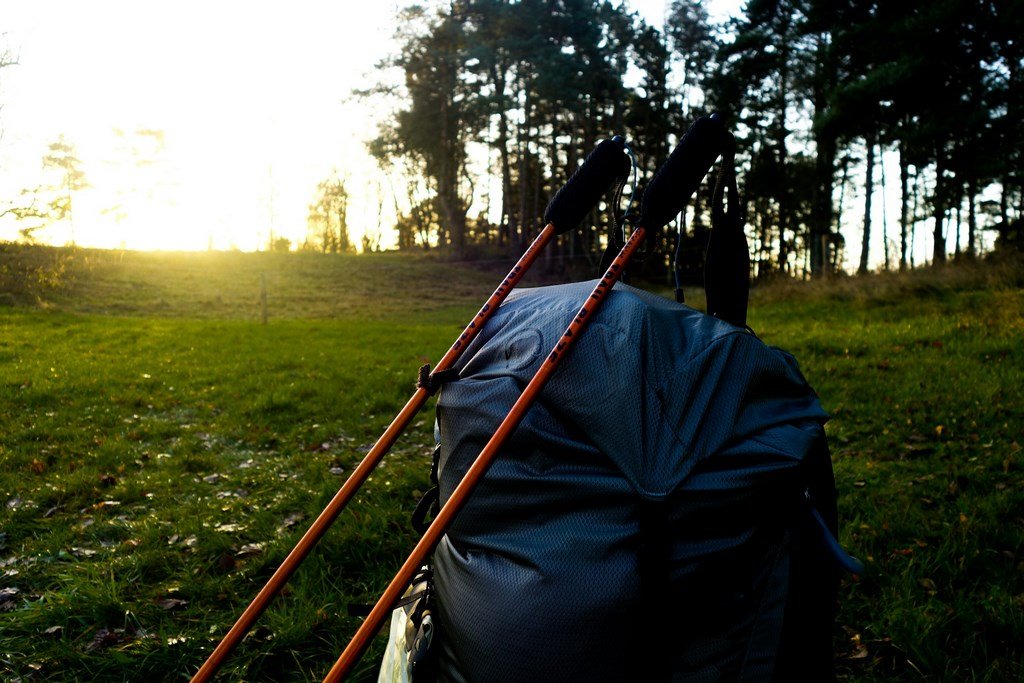
There is a particular kind of freedom found in the British countryside—the smell of damp earth in a Devon lane, the sweeping views from a Malvern hill, and the steady, reassuring “click-clack” of poles on a gravel path. For many older walkers, that last sound is the sound of independence.
As we get older, our relationship with the trail changes. Our spirit is as adventurous as ever, but our knees, hips, and ankles might start to voice their “complaints” after a few miles of undulating terrain. In 2026, walking poles (or trekking poles) have moved away from being “optional extras” for mountaineers; they are now essential tools that allow us to walk further, faster, and with significantly more stability.
By adding two extra points of contact with the ground, you aren’t just a hiker anymore—you’re a “four-legged” explorer. Here is how to choose the best lightweight poles to keep you balanced, protected, and moving through the great British outdoors.
Why Lightweight Poles are the “Secret Weapon” for Seniors
For an older walker, every gram matters. If a pole is too heavy, the repetitive motion of swinging it forward thousands of times can lead to shoulder fatigue or wrist strain. However, the benefits of a high-quality, lightweight set are transformative:
The 25% Rule: Scientific studies consistently show that using poles can reduce the impact on your knee joints by up to 25%, particularly on descents where the “braking” force is highest.
The “Outrigger” Effect: Poles act as stabilizers. When you’re navigating slippery mud in the Peak District or uneven tree roots in the New Forest, they provide that vital “save” if you stumble.
Upright Posture: Poles encourage you to walk with your head up and shoulders back, opening up your lungs and improving your breathing—essential for those steeper climbs.
Top 3 Lightweight Walking Poles for 2026
1. Leki Cressida FX Carbon (The Ergonomic Champion)
Leki is often considered the “Mercedes-Benz” of the pole world. The Cressida range is specifically designed for those who want maximum comfort and minimal weight.
The Grip: Features the Aergon Air grip—a hollow-core technology that is incredibly light and tilted at an ergonomic angle to keep your wrist in a neutral position.
The Lock: The Speed Lock 2+ system is the easiest in the industry to use, even if you suffer from arthritis or have reduced grip strength in your hands.
2. Black Diamond Pursuit (The Stability King)
Black Diamond poles are renowned for their ruggedness. The Pursuit model features a natural cork grip that “wicks” away sweat and moulds to the shape of your hand over time.
The Benefit: It features a “flick-lock” system that is much more reliable than older “twist-lock” designs, which can sometimes slip under heavy pressure.
UK Bonus: They come with interchangeable “carbide” tips for the trail and rubber “paws” for those paved sections of the South Downs Way.
3. Silva Carbon Trekking Poles (The Ultralight Specialist)
Weighing in at just 200g per pole, these are the minimalist’s dream.
The Benefit: Made from high-quality carbon fibre, they absorb the “micro-vibrations” from hard surfaces, protecting your elbows and shoulders from the “jarring” sensation often felt with cheaper aluminium poles.
Comparison: Top Poles for Older Walkers at a Glance
| Feature | Leki Cressida FX | Black Diamond Pursuit | Silva Carbon Trekking |
| Weight (per pole) | ~225g | ~250g | 200g |
| Material | Carbon Fibre | Aluminium | Carbon Fibre |
| Grip Material | Ergonomic Aergon Foam | Natural Cork | Cork/Foam Hybrid |
| Locking Type | Speed Lock 2+ (Lever) | FlickLock+ (Lever) | Flip-Lock (Lever) |
| Best For… | Joint relief & comfort | Stability on rocky ground | Minimalist / Long days |
3 “Pro” Tips for Using Your Poles Correctly
The 90-Degree Rule: On flat ground, your elbow should be at a perfect 90-degree angle when holding the pole. If your hand is higher than your elbow, the pole is too long and will strain your shoulders.
Shorten for Uphill, Lengthen for Downhill: This is the golden rule of mountain safety. On a steep climb, shorten your poles by 5-10cm to help pull yourself up. On a descent, lengthen them so you can “plant” them ahead of you to take the weight off your knees.
The “Strap” Secret: Don’t just slip your hand through. Bring your hand up through the loop from underneath and then grip the handle over the strap. This allows the strap to support your weight, meaning you don’t have to grip the handle tightly, which prevents hand fatigue and “writer’s cramp” on the trail.
Why Carbon Fibre is Worth the Investment
In 2026, the debate between aluminium and carbon fibre is largely settled for older walkers. While aluminium is “bend-resistant” and cheaper, carbon fibre is significantly better at vibration dampening. Every time a metal pole hits a hard road, it sends a tiny shockwave up to your elbow and shoulder. Over a six-mile walk, that’s a lot of “shocks.” Carbon fibre absorbs that energy, leaving your joints feeling much fresher at the end of the day.
FAQ: Your Walking Pole Questions Answered
1. Is one pole enough, or do I need two?
While a single “hiking staff” can help with balance, two poles are significantly better for health. Two poles create a symmetrical gait and ensure that both sides of your body are sharing the load. If you only use one, you may end up with an asymmetrical strain in your hips.
2. Are “Clip-Locks” better than “Twist-Locks”?
Absolutely. We strongly recommend Lever-Locks (Clip-Locks) for older walkers. Twist-locks can be very difficult to tighten if you have stiff fingers, and they are prone to collapsing if they aren’t tightened perfectly. Clip-locks are “visual”—you can see that they are securely closed.
3. Do I need to use the rubber “paws” on the tips?
Use the rubber tips on tarmac or hard-packed gravel paths to prevent that “tapping” noise and to provide better grip. When you move onto grass, mud, or soft forest trails, remove them to reveal the carbide (metal) tip, which will “bite” into the ground for better stability.
4. How do I clean my poles after a muddy UK walk?
After a wet day, pull the sections of your poles completely apart and wipe them down with a dry cloth. Never use oil or WD-40 on the internal mechanisms, as this will cause the locks to slip!
5. Can I take my walking poles on a plane for a holiday?
Yes, but they must go in your hold luggage. Security rules in most UK airports do not allow trekking poles in carry-on bags as they are considered “blunt instruments.”
![7 Best Waterproof Walking Boots for Muddy UK Trails [2026 Review]](https://ladyplatform.com/wp-content/uploads/2026/01/Salomon-Quest-4-GTX.jpg)
![Tired of High Prices? 5 Affordable Dryrobe Alternatives for Wild Swimming [2026 Guide]](https://ladyplatform.com/wp-content/uploads/2026/01/dryrobe-alternative.jpg)