
The British coastline is a siren. From the emerald coves of Dorset to the bottomless indigo of Loch Ness, our waters are breathtakingly beautiful. But for many, that beauty is tempered by a cold, sharp spike of anxiety. You stand on the shore, heart racing, looking at the horizon, and your brain whispers: “What’s under there?” or “What if I can’t touch the bottom?”
If you feel this way, you are in good company. Even the most seasoned “wildies” often feel a flutter of nerves before their first spring dip. This fear—sometimes called thalassophobia—is a natural, prehistoric survival instinct. Our brains are simply trying to protect us from the unknown.
But on the other side of that fear lies a life of exhilarating freedom, a “natural high” that no gym pool can replicate, and a sense of accomplishment that will spill over into every area of your life.
As a regular traveller through the UK’s blue spaces, I’ve helped dozens of people transition from “shore-huggers” to confident swimmers. Here are 7 tips to help you move from fear to freedom in 2026.
1. Demystify the “Dark”
The biggest fear in UK waters is the lack of visibility. Our lakes are peaty and our seas are silty.
The Reality: The “monster” in the weeds is usually just… weeds. Or a curious perch.
The Tip: Wear goggles with a wide field of vision. Before you swim, put your face in the water while you can still touch the bottom. See the light, the stones, and the gentle sway of the plants. Realise that the water isn’t “void”; it’s just a different, quieter environment.
2. The “Buddy System” is Non-Negotiable
Anxiety thrives in isolation. When you are alone, every splash is a shark and every reed is a tentacle.
The Tip: Join a local group. In the UK, groups like the Outdoor Swimming Society or local “Bluetits” branches are incredibly welcoming. Swimming with others provides “safety in numbers” and turns a terrifying ordeal into a social adventure.
3. Invest in a “Safety Anchor” (The Tow Float)
Many beginners fear they will suddenly “run out of steam” and sink.
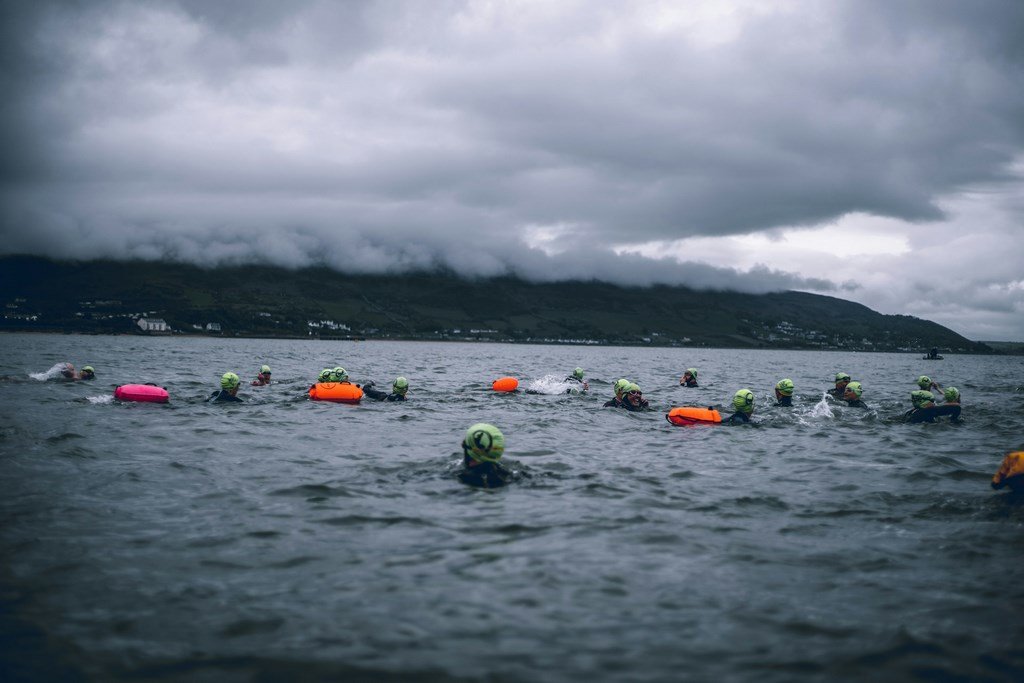
The Tip: Use a bright orange Tow Float. It is a buoyant dry bag that clips around your waist and floats behind you. It doesn’t interfere with your stroke, but if you feel a wave of panic or fatigue, you can simply hug it and float. It is a psychological—and physical—safety net.
4. Control the “Gasp”
Cold Water Shock (CWS) is often mistaken for panic. When you hit cold water, your body’s natural reflex is to gasp and breathe rapidly.
The Tip: Enter slowly. Never jump. Walk in until the water is at your waist, then splash your face and neck. Focus on long, slow exhalations. Once you control your breath, you control your brain.
5. Focus on the “Micro-Goal”
Looking at the middle of a lake is overwhelming.
The Tip: Don’t aim for the other side. Aim for the next buoy, a specific tree on the bank, or just “10 strokes.” By breaking the swim into tiny, manageable segments, you keep the “panic monster” occupied with small victories.
6. Embrace the Wetsuit (Initially)
While some “skins” swimmers might nudge you toward a swimsuit, a wetsuit is a beginner’s best friend.
The Tip: A wetsuit provides immense buoyancy. It is virtually impossible to sink in a full-length 3mm suit. Knowing that you will always bob back to the surface takes a massive weight off your mind.
7. Choose Your “Entry” Wisely
Your first swim shouldn’t be off a jagged pier into deep water.
The Tip: Find a “gentle entry” spot (see our guide on Best Spots for Weak Swimmers!). A sandy beach or a shallow riverbank where you can walk in gradually allows you to retreat if you feel overwhelmed.
Comparison: Fear-Busting Gear
| Feature | Tow Float | Wetsuit | Goggles (Polarised) |
| Primary Benefit | Physical rest & visibility | Buoyancy & warmth | Reduced glare & clarity |
| Psychological Impact | “I have something to hold” | “I cannot sink” | “I can see what’s there” |
| Safety Level | Essential | High | Medium |
| Portability | Very High (Deflatable) | Moderate (Bulky) | High |
3 “Shore-Side” Exercises to Calm the Mind
Box Breathing: 4 seconds in, 4 seconds hold, 4 seconds out, 4 seconds hold. Do this for 2 minutes before entering.
The “Five Things” Scan: While waist-deep, name 5 things you can see, 4 you can hear, 3 you can feel. It grounds you in reality.
Positive Visualisation: Instead of imagining “what goes wrong,” spend 5 minutes imagining the feeling of the hot tea and the “post-swim glow” when you get out.
FAQ: Overcoming Swim Anxiety
1. Is it normal to be afraid of fish?
Yes! It’s called ichthyophobia. In the UK, no fish will hurt you. Pike are the biggest, and they are incredibly shy. They will hear you coming and disappear long before you see them.
2. What if I get a leg cramp in deep water?
This is why you have a tow float! Roll onto your back, hold the float, and gently rub the cramp out. You can stay afloat indefinitely on your back with very little effort.
3. Does the fear ever go away?
“Fear” usually transforms into “respect.” You will always respect the power of the water, but the paralyzing anxiety will fade after 3 or 4 consistent dips.
4. Is the sea scarier than a lake?
The sea has waves and tides, which can be more unpredictable. For a first-timer with anxiety, a calm, sheltered lake or a tidal pool is often a gentler place to start.
5. How do I stop my mind from racing while I’m swimming?
Humming! It’s very hard for your brain to “panic-think” while you are humming a tune into the water. It also helps regulate your breathing.