
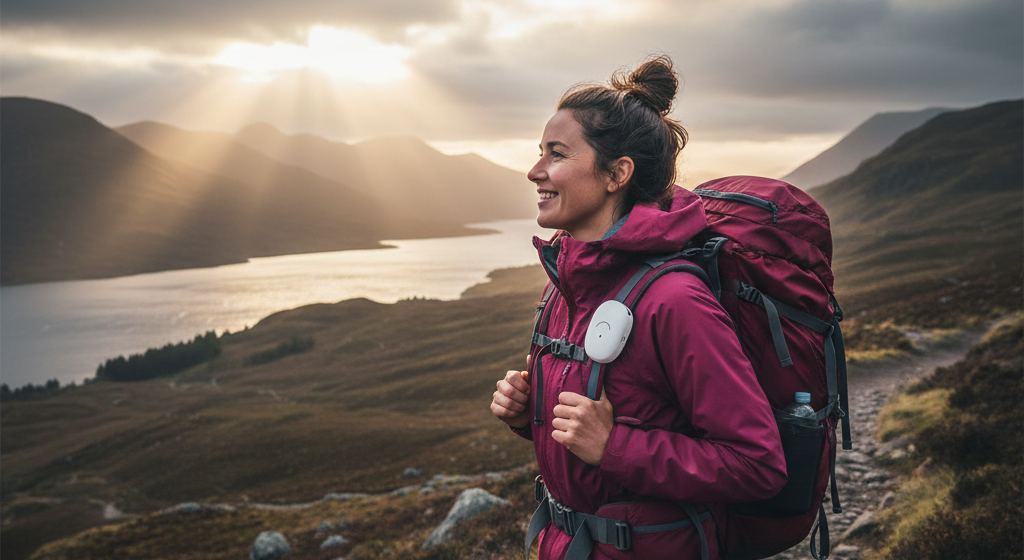
The goal of a personal safety alarm isn’t just to make noise; it’s to provide a “disruption.” In a moment of distress—whether it’s an unwelcome encounter with a person, an aggressive dog, or even an injury where you need to signal for help—a high-decibel alarm acts as a psychological deterrent and a beacon for others.
In the UK, where self-defence sprays like pepper spray are illegal to carry, a personal alarm is the most effective and legal tool a woman can have in her “safety toolkit.”
Why “Loud & Local” Matters on UK Trails
British trails can be surprisingly quiet. If you’re walking the South Downs on a Tuesday morning, there might not be another soul for a mile. Therefore, your alarm needs two things: immense volume and, ideally, smart connectivity.
Key Features to Look For:
Decibel Levels: Look for at least 130dB (equivalent to a jet take-off nearby).
Ease of Activation: You shouldn’t be fumbling with pins. A “one-handed” pull or press is essential.
Dual-Action: Some modern alarms also trigger an alert on your phone to send your GPS coordinates to a designated contact.
The 5 Best Personal Alarms for 2026
We’ve tested these from the misty fells of Cumbria to the urban trails of Edinburgh. Here are our top picks:
1. Birdie+ – The “Smart” Icon
The original Birdie was a game-changer, but the Birdie+ is the 2026 gold standard. It features a fierce 130dB siren and a flashing strobe light. But the “plus” refers to its Bluetooth connectivity: a double-tap on the device can trigger a “fake call” to your phone to give you an excuse to leave a situation, or it can alert a 24/7 dispatch centre with your location.
2. She’s Birdie (The Original) – The Reliable Classic
If you don’t want to worry about apps or subscriptions, the original Birdie is perfect. It’s small, colourful (so you can find it in your bag!), and features a simple pull-top pin. Once pulled, the siren is loud enough to be heard through thick woodland.
3. Nathan SaferRun Ripcord – The Runner’s Choice
If you prefer a faster pace, this alarm is designed to clip onto a sports bra or the shoulder strap of your hydration pack. It features a “ripcord” activation, meaning you just pull the cord down to trigger the 120dB alarm. It’s tiny, sweat-proof, and weighs almost nothing.
4. Safesound Personal Alarm – The Budget Powerhouse
Available widely on the UK high street and online, this is a no-frills, high-impact device. At 140dB, it is one of the loudest on the market. It includes a small LED torch, which is surprisingly handy when you’re trying to find your keys at the end of a sunset hike.
5. Safe Personal Safety (SPS) Smart Alarm – The Tech Marvel
This UK-based brand offers a device that sends “Help” SMS messages to up to five contacts with your exact Google Maps location. It’s a fantastic middle ground for hikers who want the security of a satellite messenger without the heavy price tag.
Comparison: Personal Alarms for the UK Trail
| Model | Decibel Level | Activation | Extra Features | Best For… |
| Birdie+ | 130dB | Pull-pin | Bluetooth / GPS Alert | The Tech-Savvy Hiker |
| She’s Birdie | 130dB | Pull-pin | Strobe Light | Simplicity & Style |
| Nathan Ripcord | 120dB | Ripcord | Clip-on Design | Trail Runners / Fast Walkers |
| Safesound | 140dB | Pull-pin | LED Torch | Maximum Volume |
| SPS Smart | 120dB | Button Press | SMS / GPS Alerts | Remote Solo Walks |
3 Rules for Using Your Personal Alarm
Keep it Accessible: An alarm at the bottom of your rucksack is useless. Clip it to your bra strap, your belt loop, or the front of your bag.
Test the Battery: Check it once a month. Most alarms use small watch-style batteries that can drain over time.
Practice the “Pull”: Don’t wait for an emergency to see how hard you need to pull the pin. Do a “silent test” (if the model allows) or a quick 1-second blast in a safe place.
FAQ: Safety on the UK Trail
1. Are personal alarms legal in the UK?
Yes, absolutely. Unlike pepper spray or knives, personal alarms are non-offensive and are recommended by the police as a safe, legal deterrent.
2. Can an alarm really stop an attacker?
An alarm’s primary job is to startle and disorient. It draws immediate attention to the situation and takes away the “element of surprise,” which is often enough to make a person or aggressive animal retreat.
3. Will the rain ruin my alarm?
Most high-quality alarms like the Nathan Ripcord or Birdie+ are weather-resistant. However, they aren’t meant for swimming! If your alarm gets soaked in a British downpour, dry it off as soon as you get home.
4. How loud is 130dB?
It is incredibly loud—comparable to a loud rock concert or an air raid siren. It is designed to be painful to the ears if held close, which is exactly why it’s so effective.
5. Should I get a Bluetooth alarm if I hike in areas with no signal?
If you hike in the remote Highlands, the Bluetooth “SOS” feature might not work without mobile data. In those cases, rely on the loud siren and consider a dedicated satellite messenger for location tracking.