
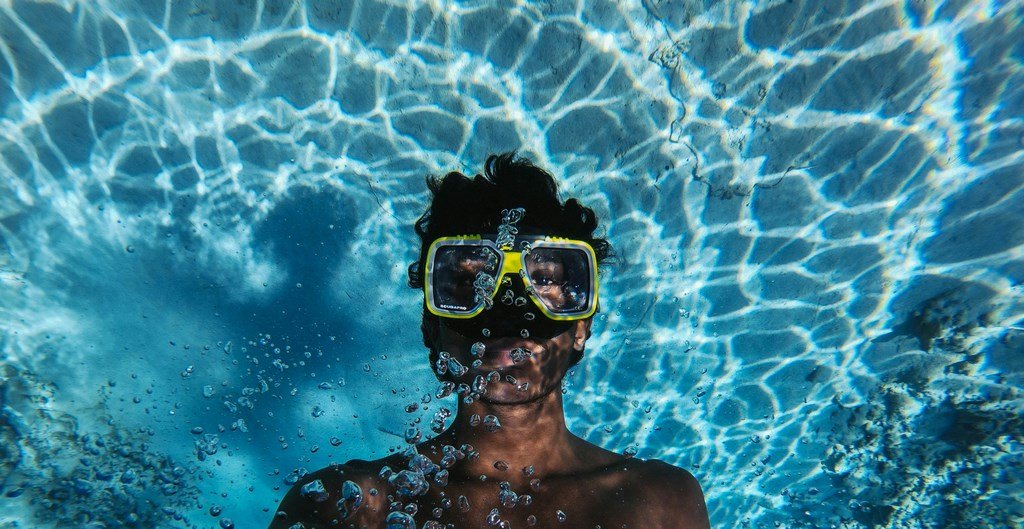
There is a moment in open water swimming that every enthusiast lives for: that split second when you lift your head to sight, and the horizon is a shimmering line of gold. But in the UK, where the sun sits low on the water during those crisp autumn mornings or bright summer evenings, that “shimmer” can quickly become a blinding hazard.
If you’ve ever tried to navigate toward a buoy in the Lake District or time a wave in Cornwall while squinting against the “shatter” of light off the water, you know that standard eyewear simply doesn’t cut it. To truly see the world above and below the surface, you need polarisation.
As a traveller who has navigated the “dazzle” of the North Sea and the mirrored surfaces of Scottish lochs, I’ve learned that polarised optics aren’t a luxury—they are a safety essential. In 2026, the technology has evolved, offering swimmers a “High-Definition” view of the wild. Here is your guide to the best polarised eyewear for the open water.
The Science of Polarisation: Why Swimmers Need It
Light reflected off a flat surface—like a calm lake or a rolling sea—becomes “horizontally polarised.” This creates what we perceive as glare: a concentrated, white light that obscures detail and causes eye fatigue.
Polarised lenses contain a special chemical filter that only allows “vertical” light to pass through. For a swimmer, this means:
Reduced Glare: You can see through the surface of the water to spot rocks, weeds, or marine life.
Better Sighting: You can identify landmarks, buoys, and fellow swimmers without the sun blinding you.
Reduced Eye Strain: No more “squint headaches” after a long 2km trek across the bay.
Top 5 Polarised Eyewear for 2026
1. Zoggs Predator Flex Polarized (The UK Standard)
Ask any regular at a British swim jetty what they wear, and eight out of ten will say “Predators.” The 2026 model features “Ultra-Polarized” lenses that filter out high-level blue light.
Best For: All-round reliability in the choppy grey waters of the UK.
The Fit: Famous for its “4 Flexpoint” technology that fits almost any face shape.
2. Huub Aphotic (The Transition Master)
The Aphotic is a photochromic and polarised goggle. It adjusts its tint based on the light conditions, making it perfect for those “four seasons in one day” British swims.
Best For: Swimmers who start in the dark dawn and finish in the bright morning sun.
3. Aqua Sphere Kayenne Polarized (The “Panoramic” Choice)
With its oversized, curved lenses, the Kayenne offers a massive field of vision. It feels more like a small mask than a goggle.
Best For: Beginners who feel “hemmed in” by small goggles and want maximum situational awareness.
4. SunGod Tempests (The “Before & After” Sunglasses)
For those who prefer a “swimming-to-cycling” lifestyle, these are world-class polarised sunglasses. They are virtually indestructible and float—a vital feature for the clumsy swimmer!
Best For: Coastal walks, sighting from the shore, and wearing on the boat.
5. Arena Air-Speed Polarized (The Performance Edge)
If you are racing in the Great North Swim or a local triathlon, these offer the lowest profile. They are “hydrodynamic,” meaning they won’t move even during a vigorous dive or a sprint finish.
Best For: Competitive swimmers who want zero drag.
Comparison: 2026 Aquatic Optics at a Glance
| Model | Type | Polarisation Level | Best Feature | Price Point |
| Zoggs Predator Flex | Goggle | High | 4-Point Frame Flex | ££ (Mid) |
| Huub Aphotic | Goggle | Variable | Photochromic adjustment | £££ (Premium) |
| Aqua Sphere Kayenne | Goggle | High | 180-degree vision | ££ (Mid) |
| SunGod Tempests | Sunglasses | Exceptional | Floating frame / Lifetime warranty | £££ (Premium) |
| Arena Air-Speed | Goggle | High | Low-profile / Racing fit | ££ (Mid) |
3 “Pro” Tips for Eyewear Maintenance
The “Lick and Rinse” Technique: Anti-fog coatings are delicate. To avoid fogging, give the inside a quick lick (yes, really!) or use a dedicated anti-fog spray. Never rub the inside of the lens with your finger, as you’ll scratch the polarised film.
Freshwater Flush: Saltwater is the enemy of the rubber gaskets and the polarised coating. Always rinse your goggles in fresh, cold water immediately after a sea swim.
The “Hard Case” Rule: Polarised lenses are more susceptible to “pitting” from sand. Never throw your goggles loose into your kit bag; always use a protective hard case.
Sighting: How Polarisation Saves Your Route
In open water, “Sighting” is the act of looking up to check your direction. Without polarised lenses, the sun’s reflection on the water can hide the very buoy you are looking for. Polarised goggles “cut through” that white light, allowing you to stay on course. This doesn’t just save you time; it saves you energy. In 2026, where safety in the wild is paramount, being able to see a changing tide or a distant boat clearly is a non-negotiable requirement.
FAQ: Seeing Clearly in the Wild
1. Is “Mirrored” the same as “Polarised”?
No. Mirrored lenses simply have a reflective coating to reduce the amount of light entering the eye (like a dimming switch). Polarised lenses have a filter that blocks the direction of the light (like a Venetian blind). For open water, you ideally want both.
2. Can I get prescription polarised goggles?
Yes! Brands like Zoggs and Aqua Sphere now offer “Step Dioptre” polarised goggles. They are a game-changer for swimmers who usually struggle to find their towel on the beach!
3. Why do polarised goggles look “darker” than standard ones?
Because they are filtering out a significant portion of reflected light, the world will appear slightly darker. However, the contrast will be much higher, meaning you’ll actually see more detail despite the lower light level.
4. Will polarised goggles help in murky river water?
Polarisation helps with surface glare. It won’t magically make silty, brown water clear, but it will help you see “through” the surface reflection to identify submerged branches or rocks just below the waterline.
5. Are they worth the extra money?
If you swim in the open water more than once a month, yes. The reduction in eye strain and the increase in safety when sighting make the extra £10–£15 a very wise investment in your swimming experience.
![7 Best Waterproof Walking Boots for Muddy UK Trails [2026 Review]](https://ladyplatform.com/wp-content/uploads/2026/01/Salomon-Quest-4-GTX.jpg)
![Tired of High Prices? 5 Affordable Dryrobe Alternatives for Wild Swimming [2026 Guide]](https://ladyplatform.com/wp-content/uploads/2026/01/dryrobe-alternative.jpg)