
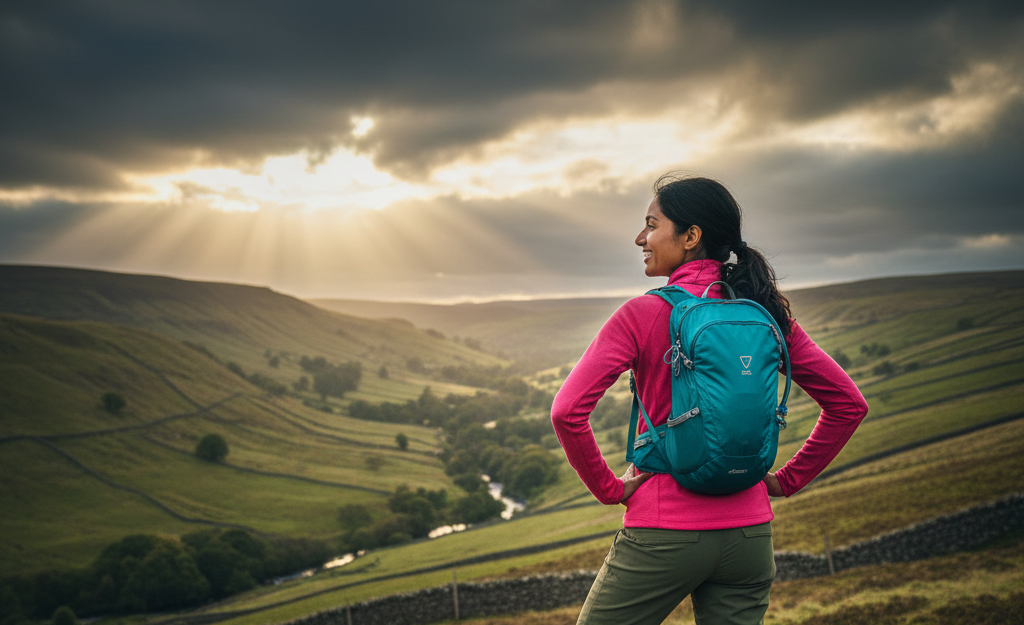
When we think of “short hikes” in the UK—perhaps a four-hour loop around Malham Cove or a brisk climb up Cat Bells—the temptation is to pack light. But “light” shouldn’t mean “thirsty.” The beauty of a hydration pack (essentially a rucksack with a built-in water bladder and a drinking tube) is that it encourages you to sip small amounts frequently. This keeps your energy levels stable and prevents the dreaded “post-hike headache.”
In the changeable British climate, a good day pack needs to do more than just hold water. It needs to sit comfortably over a waterproof shell, breathe well during a humid ascent, and have just enough room for a map, a flapjack, and your phone.
What Makes a “Perfect” Day Hike Hydration Pack?
Before we reveal our top picks, let’s talk about the features that matter when you’re out in the British countryside:
Bladder Capacity: For a short hike (2–4 hours), a 1.5L to 2L reservoir is usually the “sweet spot.”
Storage Volume: Look for a pack between 5L and 12L. This gives you enough space for an extra layer (essential in the UK!) and your essentials without feeling bulky.
Bite Valve Quality: You want a valve that doesn’t leak all over your trousers and has a simple “on/off” switch.
Stability: Look for chest (sternum) straps. Even on a gentle walk, you don’t want your pack swaying like a pendulum every time you step over a puddle.
The Top 5 Hydration Packs for 2026
We’ve tested these across the South Downs and the rolling hills of the Cotswolds. Here are the winners:
1. Osprey Katari 7 – The Sophisticated Specialist
Osprey is the “Land Rover” of backpacks—reliable, beautifully engineered, and built to last. The Katari 7 is designed specifically for those who want a low-profile fit. It comes with a 2.5L Hydraulics™ LT reservoir, which is more than enough for a half-day trek. The “AirScape” back panel is a dream for British summers, providing excellent ventilation so you don’t end up with a sweaty back.
2. CamelBak Octane 10 – The Versatile Workhorse
CamelBak practically invented this category, and the Octane 10 is their most practical offering for hikers. It sits slightly higher on the back, leaving your waist free for movement. What we love most are the pockets on the shoulder straps—perfect for easy access to your compass or a bag of trail mix without having to take the pack off.
3. Salomon Active Skin 8 – The “Second Skin” Fit
Originally designed for trail runners, the Active Skin 8 has become a cult favourite for fast-paced day hikers. It wears more like a vest than a rucksack, distributing weight evenly across your chest and back. If you hate the feeling of straps digging into your shoulders, this is the one for you. It’s incredibly lightweight and virtually bounce-free.
4. Gregory Nano 18 H2O – The “Do-It-All” Daypack
If you like your hydration pack to look and feel like a traditional rucksack, the Gregory Nano is a cracker. It has a slightly larger capacity (18L), making it the best choice if you’re hiking in the Highlands and need to carry a more substantial “just in case” kit (emergency foil blanket, extra fleece, etc.). It comes with a 3D Hydro Reservoir that dries much faster than standard bladders.
5. Decathlon Forclaz MT500 (10L) – The Budget Champion
You don’t have to spend a fortune to get a decent kit. Decathlon’s Forclaz range is highly respected in the UK hiking community for its durability. Their 10L hydration pack is simple, effective, and surprisingly comfortable. It’s the perfect “entry-level” pack for someone starting their hiking journey.
Comparison Table: Best Hydration Packs
| Model | Total Volume | Reservoir Included | Best For… | Weight (Empty) | Price (Approx) |
| Osprey Katari 7 | 7L | 2.5L | Ventilation & Quality | 360g | £75 |
| CamelBak Octane 10 | 10L | 2.0L | Accessible Storage | 420g | £85 |
| Salomon Active Skin | 8L | 2 x 500ml (Soft Flasks) | Speed & Comfort | 210g | £90 |
| Gregory Nano 18 | 18L | 3.0L | Full Day Adventures | 450g | £70 |
| Decathlon Forclaz | 10L | 2.0L | Budget / Beginners | 430g | £35 |
Pro Tips for Hydration Pack Maintenance
In the damp British climate, a neglected water bladder can quickly become a science experiment. To keep yours fresh:
The Freezer Trick: After washing and drying your bladder, pop it in the freezer. This prevents any bacteria or mould from growing between hikes.
Denture Tablets: If your bladder starts to taste a bit “plasticky,” drop a denture cleaning tablet in with some warm water, let it sit for 15 minutes, and rinse thoroughly.
Hang it High: Always hang your pack to dry away from direct radiators, which can warp the plastic components.
FAQ: Everything You Need to Know
1. Is a 2L bladder enough for a day hike?
For a short 3–4 hour hike in moderate UK temperatures, 2L is plenty. On a scorching summer day or a very strenuous ascent, you might want to carry an extra bottle as a backup.
2. How do I stop the “sloshing” sound?
To stop the water from sloshing around, turn the bladder upside down once filled and suck the air out through the tube. Without air, the water can’t move as much, making for a silent hike!
3. Can I put sports drinks in my hydration bladder?
You can, but be warned: sugar encourages mould growth. If you use electrolytes or juice, you must clean the tube and bladder with a brush kit immediately after your hike.
4. Will the tube freeze in the winter?
In the UK, it’s rare for the tube to freeze completely during a day hike, but on frosty mornings in the Peaks, it can happen. To prevent this, blow the water back into the reservoir after every sip so the tube stays empty.
5. Are hydration packs waterproof?
Most are water-resistant, but not waterproof. In a classic British downpour, your pack will get wet. We recommend using a small dry bag inside for your electronics or buying a pack with an integrated rain cover.
![7 Best Waterproof Walking Boots for Muddy UK Trails [2026 Review]](https://ladyplatform.com/wp-content/uploads/2026/01/Salomon-Quest-4-GTX.jpg)
![Tired of High Prices? 5 Affordable Dryrobe Alternatives for Wild Swimming [2026 Guide]](https://ladyplatform.com/wp-content/uploads/2026/01/dryrobe-alternative.jpg)